

Abogados Aertken

Setting up an S.L. in SpainThe right structure – before you invest.

I guide you through setting up a Spanish S.L. – for an investment or a business activity in Spain. And I tell you openly when an S.L. is not worth it.
Get in touch
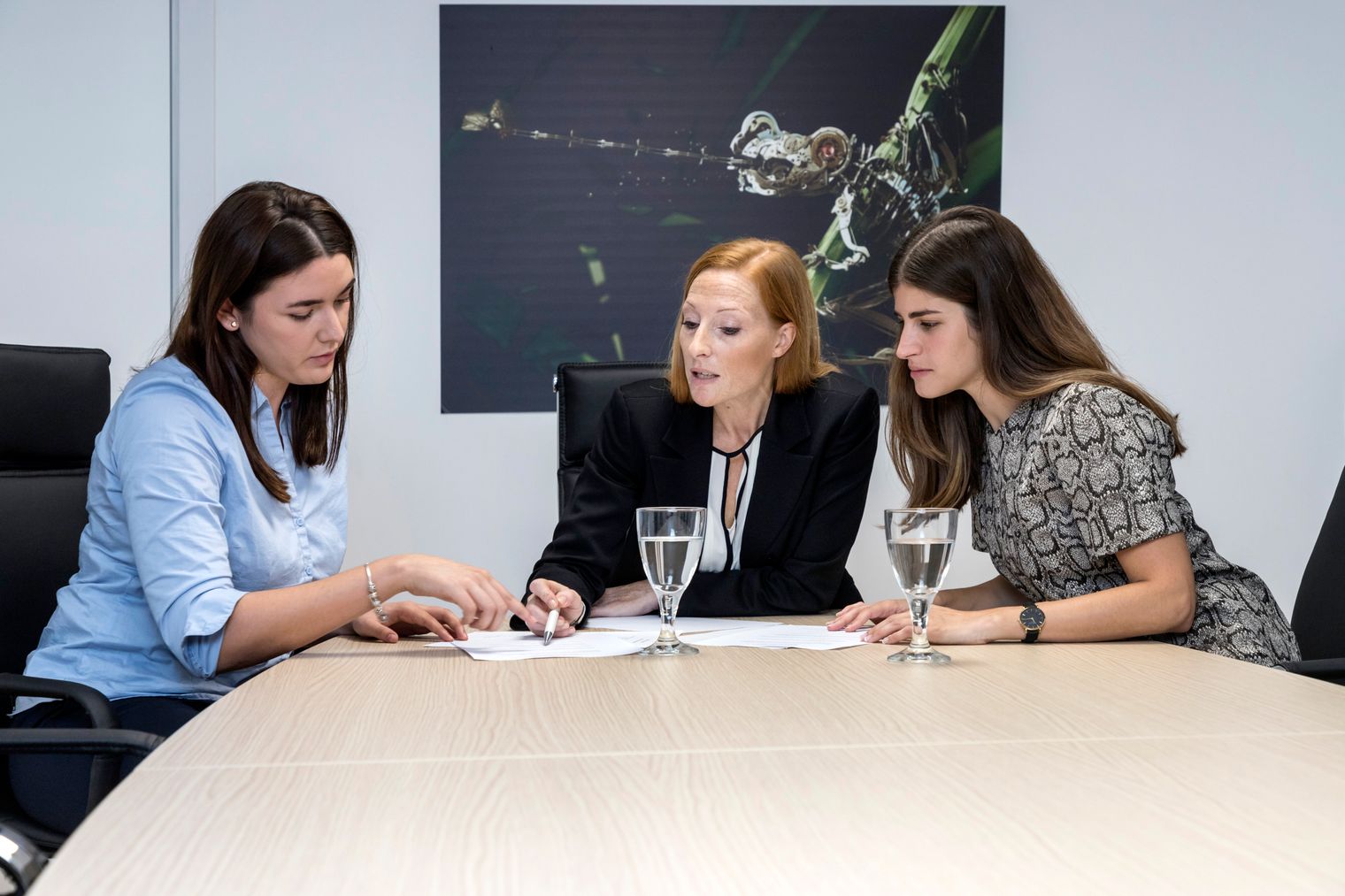
Sandra Aertken discussing documents with colleagues at the office

When an S.L. makes sense – and when it doesn't

A Spanish S.L. (Sociedad Limitada) is a limited liability company – comparable to a private limited company (Ltd) or a German GmbH. It makes sense above all if you are doing business in Spain, letting property on a commercial basis, or if several investors are involved in a project.

For a holiday home that you mainly use yourself, however, it is often the more expensive solution: the company needs bookkeeping, annual accounts and ongoing tax returns – even in years without income. I tell you openly which model suits your case and, where necessary, coordinate with your tax adviser.

Setting up your S.L., step by step

  1. 01

    Reserve the company name

    The name of your S.L. is applied for at the Central Commercial Register in Madrid. An NIE is required for the application. I check in advance whether your preferred name is available and apply for the certificate.

  2. 02

    Bank account and share capital

    The company needs a Spanish bank account into which you pay the share capital. We present the bank certificate confirming this to the notary.

  3. 03

    Articles of association and incorporation before a notary

    I draft the articles of association to suit your plans. The incorporation is notarised before the notary – with me at your side or under a power of attorney.

  4. 04

    Tax number and Commercial Register

    After the notary appointment, the tax number is applied for and the company is entered in the Commercial Register. Your S.L. is then fully operational.

What I take care of – and what the notary does

Me, as your lawyer

  • Advice on whether an S.L. makes sense for your plans at all
  • Drafting the articles of association
  • Reserving the company name and preparing all documents
  • Coordination with the bank, the notary and your tax adviser
  • Applications for the tax number and registration in the Commercial Register

The notary

  • Verifying identity, powers of attorney and the bank certificate
  • Notarising the incorporation and the articles of association
  • The notary is bound to neutrality – and does not advise you on your structure

Questions about the S.L.

What clients ask me about the S.L.

See all questions →

Sometimes yes, often no. An S.L. can make sense if the property is used for business purposes or several investors are involved. But it entails ongoing costs for bookkeeping and tax returns, and private use by the shareholders can have tax consequences. I tell you openly when an S.L. is worthwhile – and, where necessary, coordinate with your tax adviser.

In four steps: reserving the company name (which requires an NIE), bank account and share capital, incorporation before a notary, and the tax number and registration in the Commercial Register. How long it takes depends mainly on the NIE, the bank and the registries – usually a few weeks. I coordinate the steps so that nothing stalls.

Yes. An S.L. can have a single shareholder, and you can be its director yourself – you do not need to live in Spain, but you do need an NIE. Where the company is actually managed from can have tax consequences; where necessary, I coordinate this with your tax adviser.

First the structure, then the signature.

Tell me what you are planning in Spain. I will tell you whether an S.L. is the right form for it.

Get in touch

Companies

The S.L.: Spain's limited company

Anyone dealing with company law in Spain will inevitably come across the S.L., the Spanish counterpart of a German GmbH or a private limited company. It is the most common company form and is also of interest to many foreign clients.

The company has a minimum capital of €3,000.00 and can be set up within a few days. Under certain circumstances, as little as €1.00 needs to be paid in, although a mandatory reserve and joint and several liability of the shareholders for the difference (€2,999.00) then apply.

Who is an S.L. worthwhile for?

Back when tax law still allowed costs to be saved – particularly on wealth tax – by interposing an S.L. when buying property, this structure was a popular way to acquire property worth €1,000,000.00 or more. This has changed, not only as a result of rulings by Germany's Federal Fiscal Court (keyword: "hidden profit distribution"), but also due to changes in Spanish tax law. Wealth tax cannot simply be avoided if the company merely holds assets (patrimonial). As a result, this advantage, often considerable in the past, has unfortunately disappeared.

The situation is different for "active" companies that can demonstrate genuine business activity (not merely letting the property to their director) and generate income (or losses). In these cases, an S.L. can be a relatively inexpensive alternative.

In addition to the set-up costs, there are costs for managing the company, the required tax returns and the annual accounts. For "inactive" companies, it is therefore worth checking carefully whether going through a company is really the best route.

Would you like to set up an S.L. or find out whether it is a sensible option for you? Send your enquiry to: s.aertken@abogadosaertken.com

Last updated: 10/2026 · Does not replace individual advice.

Checklist

S.L. formation checklist

Applying for a company name

  • The application is filed with the name and the NIE (required) at the central registry in Madrid.
  • Please let me know on whose behalf the name is to be applied for, and send copies of the ID and NIE.
  • Send five name suggestions.

Bank account and share capital

  • Once you have the company name certificate, you should open a bank account in Spain (with a bank of your choice) and pay in the share capital in line with your intended shareholdings.
  • Please contact the bank beforehand – all shareholders may need to show an NIE.

Notary appointment

With the name certificate and the bank's confirmation of the payments, the notary appointment can be prepared. For this, please send me the following further information:

  • Registered office
  • Management: several directors or a sole director, plus their personal details
  • Corporate purpose (description of the business activity)

The deed of incorporation is signed before the notary. With it, the company's tax number (CIF) is applied for and the company is entered in the Commercial Register.

Last updated: 10/2026 · Does not replace individual advice.

NIE

The Spanish tax identification number, or "NIE"

In Spain, without the mysterious NIE (Número de Identificación de Extranjeros), you are nobody – you practically don't exist. This means you can't open a bank account, register a car or even acquire property, for the simple reason that taxes have to be paid, and for that you need a Spanish tax identification number: the NIE.

The NIE stays the same for life and replaces any other identification number. For Spanish nationals, this number is the same as their ID card number (DNI – Documento Nacional de Identidad), which likewise stays the same for life.

The NIE can be applied for from abroad at Spanish consulates (each consulate publishes its requirements online) and, of course, here in Spain with the local authorities.

Always required

  • Application form EX-15
  • Valid ID card/passport together with a copy (certified by a notary if in Spain, or certified and bearing the Hague Apostille if certified by a foreign notary; consulates usually only require the original ID document)

If you don't apply in person

  • Notarial power of attorney (if granted abroad: bearing the Hague Apostille and with a certified translation)
  • Authorisations to be able to file the application with the authorities

How long it takes to be issued depends on how busy the authorities are and can range from weeks to months.

If you'd like my help with this, please contact me at: s.aertken@abogadosaertken.com

Last updated: 10/2026 · Does not replace individual advice.

Abogados Aertken
Get in touch

(+34) 971 72 19 66 · Mon–Fri 9:00–13:30

Get in touch

Preferably in writing – I reply personally.

Contact formRecommended · 2 minutesSend an emails.aertken@abogadosaertken.comDirectionsOpen in Google Maps

Mon–Fri 9:00–13:30 · (+34) 971 72 19 66